
Skip to content
Free written quotesLocal crews
Call now (07) 5550 4134
Bundaberg, QLD (07) 5550 4134
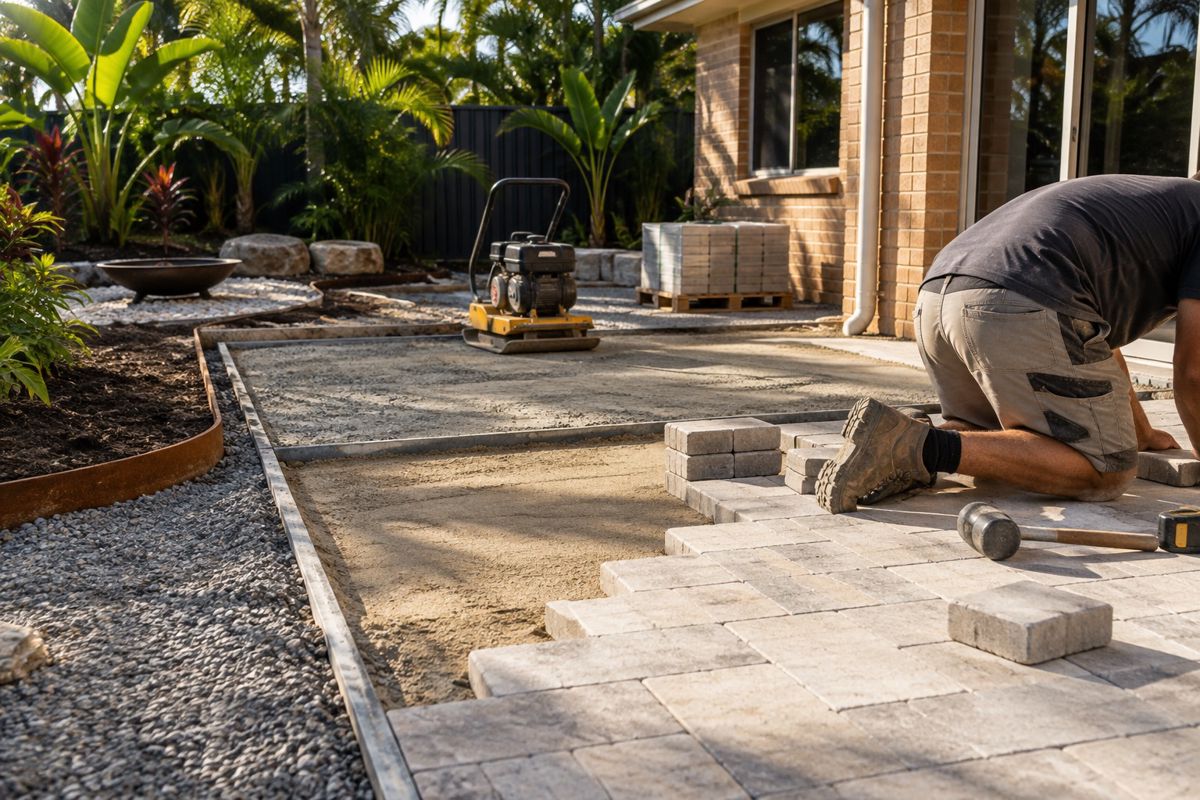
Half-laid paver patio on a compacted rock base behind a brick home

Paving and hardscaping in Bundaberg

Paver patios, paths and fire pits in Bundaberg

Outdoor areas built on a firm base, with falls for drainage and surfaces chosen for Queensland sun and storms.

  • Pavers laid on a compacted rock base
  • Falls set so rain runs away from the house
  • Surface options to suit heat and slip risk

What does a hardscape contractor in Bundaberg build?

Hardscape is the hard part of a yard: everything that is not lawn or plants. A hardscape contractor Bundaberg homeowners call in will usually build the paving, edges and structures that make an outdoor space usable all year.

Common jobs include:

  • paver patios and alfresco areas off the back of the house
  • walkways and entry paths
  • garden edging and steps
  • low seating walls and barbecue areas
  • fire pit areas, with the right clearances

In a climate where you can eat outside most of the year, a good paved area becomes the main living space. It also keeps mud and red dust out of the house. Many paving jobs sit inside a bigger plan, so see landscape design if you are redoing the whole yard.

Which paving suits Queensland heat?

Surface choice matters here. Dark pavers in full summer sun can be hot underfoot. Light colours stay cooler. Here are the options people ask about most.

  • Concrete pavers: many shapes and colours, and a practical choice for patios and paths.
  • Natural stone: sandstone, bluestone and travertine look good and weather well. Some stones stay cooler underfoot than others.
  • Porcelain pavers: hard-wearing, stain-resistant and often used around alfresco areas and pools.
  • Permeable pavers: gaps let some rain soak through, which helps with runoff on tight blocks.

Around pools and under covered areas where moss and mould can grow, ask about slip resistance ratings. Some surfaces need sealing, and sealing needs repeating. Ask the supplier what upkeep each option wants before you choose.

How is a paver base built to last through the wet season?

Most paving failures come from what is under the pavers, not the pavers themselves. A sound job follows a set order.

  1. Mark out the area and dig the soil out to the depth the base needs.
  2. Compact a layer of crushed rock in stages so it will not settle.
  3. Lay a bed of screeded sand, then the pavers in the chosen pattern.
  4. Fit an edge restraint so the pavers cannot spread.
  5. Fill the joints and compact the surface.

The surface needs a gentle fall so water runs away from the house and toward a drain or garden. Summer downpours will show up any low spot. Red soil is soft when wet, so a base sitting on unprepared wet soil will move. Paving beside a house slab should also leave the slab edge visible, because termite inspections in Queensland rely on seeing it. Ask your landscaper how they handle this.

If you plan a fire pit, keep it well clear of walls, fences, roofs and overhanging trees. Check Bundaberg Regional Council local laws and any current fire restrictions before burning wood. A gas unit is a different matter and may need a licensed gasfitter.

Prices vary too much to list here. The factors that matter most are:

  • the area and the shape, since curves and angles mean more cutting
  • the paver or stone you choose
  • how deep the base must be, which depends on whether it carries foot traffic or a vehicle
  • access for a machine and for deliveries
  • removing old concrete, pavers or garden beds first
  • steps, walls, drains or lighting built into the same job

Ask for the quote to show the material, the base and the labour as separate lines. That makes it easier to see what a cheaper quote may have left out.

How long does paving take, and when should I call?

A small patio can be finished in a few days. A larger alfresco area with steps and edging may take a week or two. Wet weather slows excavation and bedding, so allow some flexibility.

On the day, expect marking out, digging, deliveries of rock, sand and pavers, and noise from saws and compactors. Cutting pavers makes dust, so close windows nearby. Keep pets away from the work area until the joints are filled.

Call before you buy pavers so the base and levels are planned first. Call if an existing patio is sinking, pooling water or lifting. If the paved area sits beside a slope, our retaining walls and drainage page explains how that is handled. You can also start at the home page.

Free written quotes
Local crews
Reliable scheduling
Tidy job sites

Questions about landscaping in Bundaberg

What is the difference between hardscaping and landscaping?

Landscaping covers everything outdoors, including lawns and plants. Hardscaping is the built, hard part: paving, paths, steps, walls and fire pit areas. Most yards need both, and they work best when planned together, so the paving suits the planting and the water has somewhere to go.

Do I need approval to build a paver patio?

A flat paved patio at ground level often needs no approval, but it depends on size, any roof over it and the zoning. A roofed patio, a deck, or paving that changes drainage or sits close to a boundary can need approval. Check with Bundaberg Regional Council or a building certifier before work starts.

Which pavers stay coolest in summer?

Light colours reflect heat and feel cooler than dark ones. Some natural stones, such as travertine, tend to stay comfortable underfoot, and shade from a roof or trees helps most. Testing a sample in the sun at home tells you more than looking at it in a showroom.

Can pavers go over an existing concrete slab?

Sometimes. It depends on the slab's condition, its levels and where it sits against the house. Cracked or moving slabs usually need to come out. Laying over a sound slab needs a suitable bedding method and a fall for drainage. A landscaper should look at it in person before recommending either way.

Can I have a fire pit in my backyard in Bundaberg?

Often yes, but rules vary. Check Bundaberg Regional Council local laws and any fire restrictions in force. Keep the pit well clear of buildings, fences and overhanging branches, and never leave it unattended. A gas fire pit may need a licensed gasfitter for the connection.

How do I look after pavers once they are down?

Sweep regularly, wash off mould and moss, and top up the joint sand now and then. Some stone and concrete pavers should be sealed, and the seal wears off over time. Ask what your chosen pavers need. A pressure washer held too close can blast out joint sand and mark soft stone.

Request hardscaping

Tell us what you need and we call you back.

No obligation.

Step 1 of 3

What do you need?

Ready when you are

Call now or request a quote online.

(07) 5550 4134

How it works

  1. Tell us about the yard

    Size, goals and any photos.

  2. Site visit and quote

    We walk the property and put the price in writing.

  3. We do the work

    Scheduled crew, cleanup included.