
Skip to content
Free written quotesLocal crews
Call now (07) 5550 4134
Bundaberg, QLD (07) 5550 4134
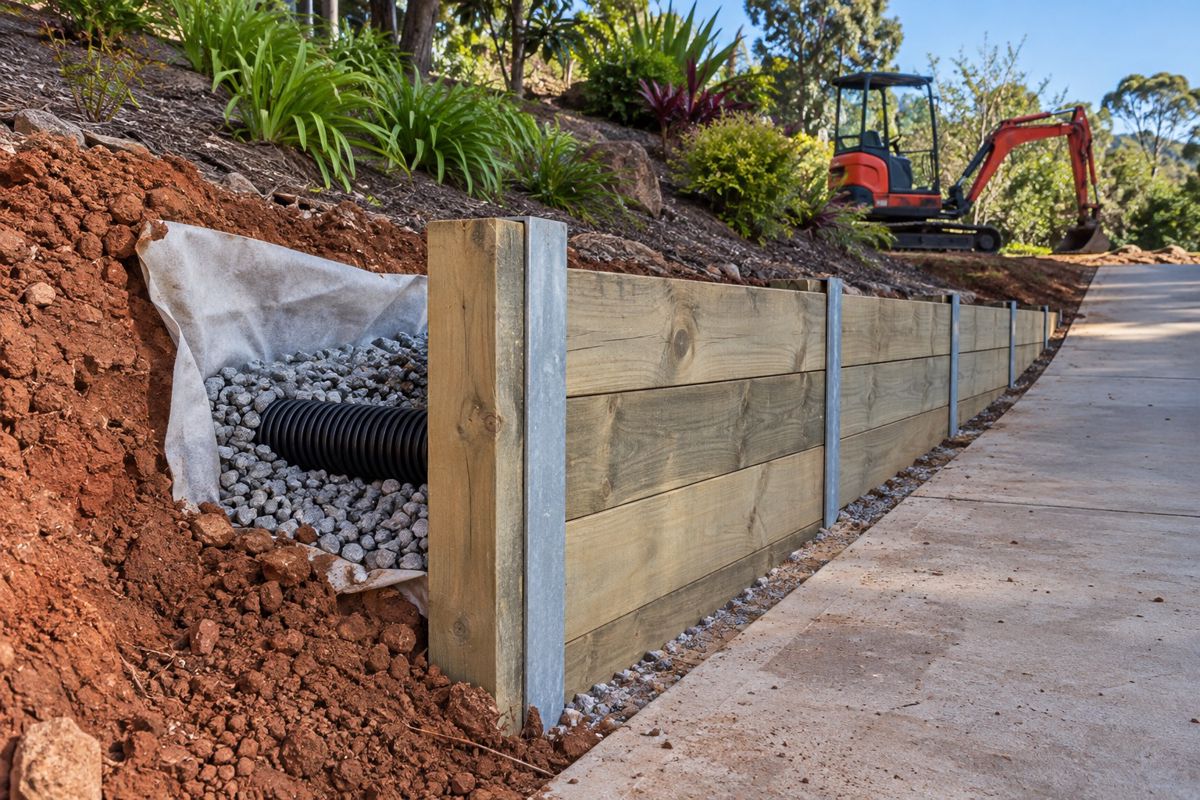
Timber sleeper retaining wall with drainage pipe and gravel behind it

Retaining walls and drainage in Bundaberg

Retaining walls and drainage for Bundaberg blocks

Walls that hold back soil and drains that move water away, planned together so neither one fails the other.

  • Timber, concrete, block and rock options
  • Drainage built in behind every wall
  • Advice on approvals and engineering

Step 1 of 3

What do you need?

When do you need a retaining wall?

A retaining wall holds back soil where the ground changes level. A retaining wall contractor Bundaberg homeowners hire is usually called in for one of a few reasons.

  • Creating a flat lawn or patio on a sloping block
  • Holding soil beside a driveway, shed or pool
  • Terracing garden beds so rain does not wash them away
  • Replacing an old wall that is leaning or cracked
  • Stopping erosion on a bank or beside a drain

Many Bundaberg blocks are fairly flat, but there are rises and sloping lots, and cutting for a pool, shed or extension creates new levels that need holding. If a yard floods, the fix may be drainage alone, with no wall at all. Work on levels often sits inside a wider landscape design.

Which retaining wall material is right for the job?

Each material has a place, and the right one depends on height, site and budget.

  • Treated pine sleepers: quick to build and warm in look. Use timber rated for ground contact, and remember that wet soil and termites shorten the life of timber in Queensland.
  • Concrete sleepers: steel-reinforced, strong and long-lasting, usually slotted between steel posts.
  • Concrete block: reinforced and filled, can be rendered or clad, and suits taller or more formal walls.
  • Natural rock: looks at home in a garden and suits low walls, though it needs skilled laying.

For anything tall, supporting a driveway or sitting near a boundary, an engineer may need to specify the wall. It is better to learn that at the start than after the wall is built.

Why is drainage behind the wall so important?

Water is what knocks walls over. When soil behind a wall fills with rain, the pressure on the wall rises sharply. Bundaberg summers can deliver heavy rain in short bursts, so drainage is not optional.

A standard setup has a slotted agricultural drain pipe at the base of the wall, surrounded by free-draining gravel and wrapped in geotextile fabric so soil cannot clog it. The pipe leads to an approved outlet. Walls also often have weep holes and a gravel backfill.

Drainage work stands on its own too. Soggy lawns, water pooling against house walls and wet spots under paving can be fixed with grading, pits, grates and buried pipe. Stormwater generally has to reach a lawful point of discharge, not run onto a neighbour's land, and local rules differ by property. A neat lawn above a good drain is also the right base for new turf.

In Queensland, a retaining wall over about one metre high, one that supports a building, driveway or pool, or one close to a boundary can need engineering and approval. Rules change, so check with Bundaberg Regional Council or a building certifier before you start. If the wall is on a boundary, talk to your neighbour early.

The price is driven by:

  • height and length of the wall
  • material and whether it needs engineering
  • how much soil must be dug out or carted away
  • access for machines and deliveries
  • the drainage required and where it must outlet
  • removing an old wall first

Ask for a written quote that lists wall, drainage and soil removal separately.

How long does it take, and when should I call?

A low garden wall can be built in a couple of days. A longer or taller wall with drainage and engineering can take a week or more. Concrete needs time to cure, and rain stops excavation, so dates may move in the wet season.

On the day, expect machinery, spoil piles, deliveries of sleepers, blocks, rock and gravel, and some mess. Services such as water, power and telecommunications lines may run through the yard, so they should be located before digging.

Call when a wall is leaning, cracking or bulging, when water collects against the house, or before you build a pool, shed or driveway on a slope. Once the ground is stable, an irrigation system can keep the terraces planted and green. The home page has an overview of our services.

Free written quotes
Local crews
Reliable scheduling
Tidy job sites

Questions about landscaping in Bundaberg

How high can a retaining wall be without approval?

Rules depend on the wall's height, what it supports and how close it is to a boundary. In Queensland a wall over about one metre, or one holding up a building or driveway, can need engineering and approval. Check with Bundaberg Regional Council or a building certifier before you plan the wall.

How long does a retaining wall last?

It depends on the material, the build quality and the drainage. Treated pine can last a long time when built correctly, but wet soil and termites shorten its life. Concrete and block walls usually last longer. Poor drainage is the main reason any wall fails early.

What is an agi drain?

An agi drain is a slotted pipe laid in free-draining gravel and wrapped in geotextile fabric. It collects water behind a wall or beneath a soggy patch and carries it to an approved outlet. It is a common part of both retaining wall and general drainage work.

Can a leaning or cracked retaining wall be repaired?

Sometimes a wall can be stiffened or repaired, but many leaning walls have failed because water built up behind them, so the wall may need rebuilding with proper drainage. A landscaper should inspect it and explain the options in writing, including whether an engineer needs to be involved.

Where can drainage water go on my property?

Stormwater generally has to go to a lawful point of discharge, such as the street or a council stormwater connection, not onto a neighbour's land. The rules differ by property. A landscaper can plan the drain, and you can confirm the outlet with council before work starts.

Do I need to talk to my neighbour first?

If the wall is on or near a boundary, or the work could affect the neighbour's land, it is wise to talk early. Shared walls and fences can carry legal rules about who pays and who is responsible. A short chat before work starts avoids disputes later.

Request retaining walls

Tell us what you need and we call you back.

No obligation.

Step 1 of 3

What do you need?

Ready when you are

Call now or request a quote online.

(07) 5550 4134

How it works

  1. Tell us about the yard

    Size, goals and any photos.

  2. Site visit and quote

    We walk the property and put the price in writing.

  3. We do the work

    Scheduled crew, cleanup included.